

Cholera strikes in Harare
A CHOLERA outbreak has hit Harare with five confirmed cases reported so far, health authorities have revealed.
The waterborne disease, which spreads through drinking water or eating food contaminated with the cholera bacterium which causes severe diarrhoea and vomiting, is now endemic in the country.
In a notice, the Harare City Council said three of the cases were linked to Buhera where there was a cholera outbreak last week, while two other cases were contracted from local sources.
“The city would like to inform residents that it has now five confirmed cholera cases in Hopely Zone 5, Stoneridge, Southlands, Granary and Adbernie Mbare. We urge all residents in these affected areas and greater Harare to take necessary precautions to avoid contracting cholera,” council said.
Deputy mayor Kudzai Kadzombe told NewsDay that the council was taking steps to contain the outbreak.
“As a council we are working on increasing water production and our Beatrice Infectious Hospital is actually ready for any case that can arise. We have our employees on standby waiting for any case,” Kadzombe said.
Community Working Group on Health executive director Itai Rusike said recurrent cholera outbreaks were concerning
“Zimbabwe needs to strengthen the primary health care principles and the laws regarding public health which explicitly state that communities have a big role to play in public health, but they need an enabling environment for them to do so effectively,” Rusike said.
Zimbabwe Nurses Association president Enock Dongo urged locals to exercise caution in order to stop the disease from spreading.
“This is a very preventable disease and it can be fatal if not treated. People should practise hygiene. It’s all about washing hands and drinking clean water,” Dongo said.
Meanwhile, the Health and Child Care ministry has banned church camp meetings, open markets, communal beer gatherings among other measures to curb the spread of cholera in Zaka, Masvingo.
The 2008 cholera outbreak, which started in Harare and later spread into neighbouring countries, was the deadliest — killing more than 4 000 people and affecting over 100 000 others.
CWGH’s Open Letter to the President of the Republic of Zimbabwe, Emmerson Mnangagwa urging him to prioritise a comprehensive reform on the country’s health delivery system following his recent re-election

His Excellency President Emerson Dambudzo Mnangagwa
Prioritise primary health care, govt urged

A LOCAL health lobby group, Community Working Group on Health (CWGH), has called on the incoming government to prioritise primary healthcare to achieve universal health coverage.
CWGH executive director, Itai Rusike, said Zimbabweans expected government to address the health sector’s multifaceted challenges.
“All political parties promised massive improvement in health infrastructure; more health personnel; accessible and affordable medicines; free medical care, improved health services in resettlement areas and pursuing the health for all policy, among others,” said Rusike.
“As CWGH, we summarize this as primary healthcare with clear intentions for the attainment of universal health coverage and, therefore, Sustainable Development Goals.”
He said the incoming government should “immediately shift focus to real developmental issues, particularly taking into account the dire need for improving health service provision for the benefit of ordinary Zimbabweans as articulated in the pre-elections (campaigns)”.
Rusike said the deplorable state of the country’s health system required urgent attention, starting with the primary healthcare system.
Zimbabwe needs sustained investments in primary healthcare to revitalize the health system to close gaps in access to services and to address the causes of ill-health, he said.
“Presently, infrastructure in hospitals is dilapidated, some is obsolete; medicines and supplies are in short supply; doctors, laboratorians, pharmacists, paramedics and nurses are inadequate and poorly motivated. This is against a background of sustained paltry funding to the sector from the fiscus which is of major concern.”
Rusike said the problems in the health sector were compounded by the prevalence of largely preventable diseases, behavior, lifestyles, environmental and basic water and sanitation issues.
“In recent years, many countries have adopted universal healthcare as a national priority and have committed to directing government funding towards that goal,” he said.
Engage communities in budget, CSOs urge African govts
CIVIL society organisations (CSOs) across Africa have said community participation is key in budget advocacy processes as a reminder to governments on the continent as they make budgetary plans for the coming year.
During the just-ended African Regional Advocacy Summit for NGOs and Media in Nigeria, CSOs said the community remained an important stakeholder in influencing budgetary outcomes.
Zimbabwean team leader Nonjabulo Mahlangu said communities provided valuable local knowledge and first-hand experiences that can contribute to the budget process.
“Communities can give a human face to the issues that they face, and share their experiences as far as access to health is concerned. They can share stories on the availability, affordability, appropriability and accessibility of the services,” Mahlangu said.
“This will assist in identifying gaps that need to be closed. There are various platforms where communities can participate, both at community and national levels. CSOs can raise awareness on existing spaces where communities can participate or create platforms for participation, bringing leaders to the communities.”
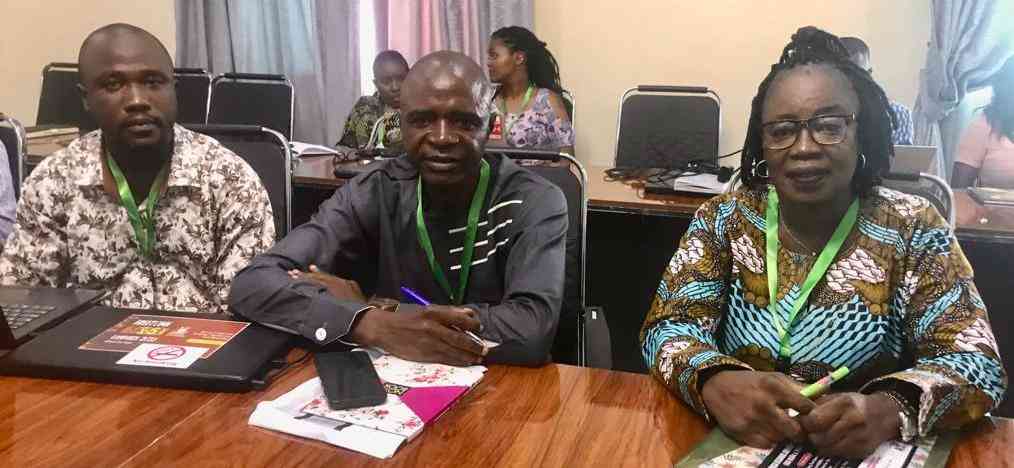
Project officer for the Africa Health Budget Network Health Security project, Health Alert Sierra Leone, David Joseph Allieu said community engagement in the budget process started from the community itself.
“We have the responsibility to add our voice to the budget process. It helps identify and prioritise needs as aligned to specific areas. Communities can provide feedback on services, programmes and infrastructure projects that can inform the allocation of resources in a way that reflects real needs,” Allieu said.
CSO stakeholders and media from eight countries which met at the summit also discussed the way forward in improving budgetary allocations to the health sector.
Prioritise health security, African nations urged
THE Africa Health Budget Network (AHBN) has urged African countries to take the issue of health security seriously as the continent struggle to recover from the COVID-19 aftershocks.
African countries’ health delivery systems are currently on their knees, including in Zimbabwe where shortages of medicines and life-saving equipment are prevalent.
Officially opening the first African Regional Advocacy Summit for NGOs and Media in Nigeria on Tuesday, AHBN co-chairperson, Muhammad Usman said COVID-19 was a reminder of the need to invest in the health sector.
“We need to take the issue of health security in Africa seriously,” Usman said.
“Let us use opportunities and experiences from past events that have affected the health sector so that a positive attitude is embedded within us. We need to focus around what we need to do to ensure that we engender accountability in our health sectors. We need to take the COVID-19 experience to advance health security in Africa.”
Community Working Group on Health executive director, Itai Rusike said raising domestic public funds was essential for universal health coverage.
“Health is recognised as a fundamental right in the Zimbabwe Constitution,” Rusike said.
“This, therefore, implies that everyone should have access to the health services they need, when and where they need them, without suffering financial hardship. Currently only about 7% of Zimbabweans have access to medical insurance and this number is insufficient to ensure decent public healthcare. No country can prosper without a healthy citizenry.
“The current health financing model also remains unsustainable as it heavily relies on external financing as well as out-of-pocket financing. In spite of the huge external support from development partners, there is still a huge financing gap in the health sector in the country which calls for greater innovation and commitment by the government to sustainably address it.”
Non-governmental organisations and the media from eight targeted countries of Sierra Leone, Nigeria, Senegal, Uganda, Zimbabwe, Malawi, Kenya and Cameroon, with funding from Ford Foundation and COPASAH are attending the four-day summit.
‘Men die earlier than women in Zimbabwe’
THE Bible speaks of humans who lived the longest in the history of mankind, the oldest having died at the age of 969 years – Methuselah.
Those who lived the longest are all men. Although less is said about matriarchs, it’s quite clear that men lived longer back then.
Sadly, centuries later an average Zimbabwean male is expected to live for about 61, 2 years with statistics showing that men account for more deaths in the country compared to women. Women live significantly longer than men as they have a higher life expectancy of 68 years.
Life expectancy refers to the number of years a person can expect to live and it is based on an estimate of the average age that members of a particular population group will be when they die.
Clean water key to containing cholera
https://www.herald.co.zw/clean-water-key-to-containing-cholera/
‘Govt should invest in user-friendly drug rehab centres’

DRUG abuse is now a humanitarian disaster that is inflicting harm to the young generation, perpetuating violence and poverty especially among the low-income and vulnerable communities, health stakeholders have said.
Speaking to NewsDay, Community Working Group on Health executive director Itai Rusike, said there is need to focus on social support structures.
“We can only solve our current problems that have resulted in the surging drug abuse, overdose and deaths through a public health approach. The government should invest in proven services and care to address substance abuse and mental health needs,” he said.
Rusike said there is need to also invest in youth-friendly drug rehabilitation and counselling services instead of placing the burden of care on families who lack information and tools to respond to the scourge.
“Families should get greater support from government and other stakeholders to promote communication and to help those facing drug abuse challenges. We need to prioritise prevention of drug abuse and tackle the drivers of drug abuse.
“The root cause of drug abuse in Zimbabwe is lack of jobs and enterprise opportunities, recreation facilities and opportunities for young people to participate in decisions affecting their lives,” said Rusike.
President Emmerson Mnangagwa said government would come up with tougher laws to deter drug dealers from preying on youths.
For Youths by Youths team leader, Wilbert Jena, said there was need to continue raising awareness against drug and substance use through different strategies including youth friendly strategies.
“There is a need to capacitate health professionals on drug use disorders and overdose at local clinics since it’s the first port of call. Overdose prevention kits should be made easily available in local and provincial hospitals,” he said. Last week, the country joined the world in commemorating the International Day Against Drug Abuse and Illicit Trafficking.
On Friday, For Youths By Youths in partnership with other stakeholders commemorated the International Day Against Drug Abuse and illicit Trafficking in Mbare.
Statistics from the World Health Organisation indicate that over 500 000 deaths occur annually due to drug and substance use worldwide.
Perennial power cuts choke health delivery system

“The worst was seeing a new-born baby dying, and I couldn’t do anything because we didn’t have any source of power,” David Masara, nurse-in-charge at Budiriro Polyclinic in Harare, said.
His account is a tip of an iceberg on the impact of the country’s rolling power cuts on the health sector.
The perennial electricity power shortages have seriously affected the health delivery system countrywide.
Key service areas including surgical operations, life support systems, drug storages, scans, X-rays/ medical tests and examinations as well as in-patient and out- patient units have been affected.
In some institutions, expecting women have been made to bring their own lighting before admission.
However, the challenge is being averted by the recent Solar For Health initiative that has seen over 1 000 health facilities across the country being equipped with solar units as back-up in case of power cuts.
“The issue of lack of power is no longer an issue at all. Pregnant women can deliver their babies in stable conditions after the installation of the solar system,” said Masara.
In some instances, especially in rural areas, the solar systems have come in as sole power supply system.
The Solar For Health programme is being implemented by the Health and Child Care ministry in partnership with the United Nations Development Programme (UNDP).
The project is largely funded through the Global Fund.
According to the UNDP, several thousands of Zimbabweans are now enjoying reliable health services as a result of the programme.
Global Fund project manager, Emmanuel Boadi, said power is of great importance in the health sector and they would continue assisting the government to ensure that institutions have uninterrupted supply.
“Since 2017, we have installed 1 044 systems in health facilities with 19 ongoing installations,” Boadi said.
“We will continue to mobilise resources to ensure all health facilities have solar power connectivity.
“We also want to assist the Ministry of Health and Child Care in the short and long-term, to have a sustainability plan.”
Addressing journalists during a recent tour of Chivi district, local medical officer Onward Tendaupenyu, said the solar intervention had made it possible to attend some cases at their hospital, minimising referrals.
“Before the Solar For Health intervention, we had no back-up and we would refer patients in labour to Masvingo General Hospital. We are now able to do caesarean sections (C-sections) here (Chivi District Hospital), so we have had an improvement, Tendaupenyu said.
He said the intervention has been helpful in reducing challenges on maternal health.
“On average we do about 10 C-sections per week. We normally had problems with emergencies during the night. We are now saving on what we would have used in referring patients,” he said.
“We are now saving on 100 litres of fuel and over $100 for staff allowances per week. We are also doing evacuation of retained products after miscarriage, and appendicitis operations among other things requiring uninterrupted power service.”
Acting Matabeleland South provincial medical director, Andrew Muza, said the intervention has been a great help in health service delivery.
“We have 117 of our health facilities on solar back-up through UNDP and partners. There has been improved patient care in terms of quality. We now have 24/7 service provision and other systems depending on power like the expanded programme on immunisation and the electronic health record system have also been connected making it easier to do our duties,” he said.
Bulawayo City Council’s health department director, Edwin Sibanda, said the programme had eased the burden on service delivery as most of their services rely on power.
Towards the end of last year, the country was exposed to further challenges as the power crisis worsened, leading to more lengthy and untimely power cuts.
Intermittent or unreliable power sources put most patients’ lives at risk and made health service delivery a nightmare.
The Solar for Health initiative also contributes to extended hours of operation, and better retention and recruitment of healthcare workers in remote settings, ensuring effective, safe healthcare.
At Mhandamabwe rural health centre, attending to patients during the night was risky as they did not have electricity.
Acting nurse-in-charge at the clinic, Petunia Tshuma, said the challenges lessened when the clinic was initiated into the programme where they now have uninterrupted power supply from the installed solar system.
“Prior to the intervention, we relied on solar lamps and torches in the event that we ran out of the normal back-up. Our challenges have lessened as we are no longer having problems in storing our medicines and we no longer meet obstacles in doing our duties during the night,” she said.
Community Working Group on Health executive director Itai Rusike said solar energy is more efficient for the rural health centres and the hard-to-reach communities.
He said solar energy assists with vaccine cold chain management and cold storage facilities to maintain vaccine integrity and avoid vaccine wastage.
“Solar energy can also assist in the reduction of maternal mortality that remains high in Zimbabwe and it can also be a motivation factor for the health workers and their families with electrical gadgets such as television sets, refrigerators, mobile phones, electrical irons etc,” Rusike said.
“The government should partner with the development partners, NGOs and the private sector to strengthen the health delivery services and improve the quality of care by investing in solar energy in clinics.”