More doctors report for duty

More doctors yesterday heeded Government’s call to return to work and joined their colleagues who reported for duty on Monday. In a statement yesterday, Government said all doctors who had been on strike at Marondera, Bindura, Gweru, Gwanda and Mutare provincial hospitals had returned to work.

This is in addition to the 340 doctors who have returned to work in Harare, Bulawayo, Chitungwiza and Masvingo.
Of 340 doctors, 105 were from United Bulawayo Hospitals, Mpilo Central Hospital (77), Parirenyatwa Group of Hospitals (98), Chitungwiza Central Hospital (27), Harare Central Hospital (29) and Masvingo provincial hospital four.None of the striking doctors at Chinhoyi Provincial Hospital have reported for work.

The numbers of doctors returning to works flies in the face of claims by the Zimbabwe Hospital Doctors Association (ZHDA) through its Twitter handle that Government’s decision to pursue disciplinary hearings against doctors who violated the law had discouraged them from ending the strike.
“The employer’s position of holding hearings and victimising members who had opted to return to work has backfired. Doctors who had resumed work at Mpilo Hospital have rejoined the industrial action,” claimed the ZHDA.

However, Mpilo clinical director Dr Solwayo Ngwenya said six more doctors reported for work yesterday.He said from the doctors who came on Monday, only three did not return yesterday.

“The situation seems to be normalising. We are able to attend to emergencies. Although three doctors who had initially reported for work on Monday did not come today, six more showed up,” said Dr Ngwenya.Parirenyatwa Group of Hospitals operations director Mr Edson Mundenda said more doctors also reported for work yesterday.

As of midday, Mr Mundenda said 11 junior registrars, eight senior registrars, four senior houseman officers (SHOs) and three junior resident medical officers (JRMOs) had reported for work.However, the number of senior resident medical officers (SRMOs) who reported for work remained at 12.

Chitungwiza Central Hospital operations director Mr Washington Machiridza said more SRMOs reported for work yesterday.
These latest developments follow a ZHDA voting process to continue the strike on Monday, which some doctors voted against.
Sources close to the process said about 15 percent of striking doctors from Parirenyatwa and Harare Central Hospital voted against continuing the strike.

They further said while UBH voted for the strike, Mpilo Hospital voted against. “At the end of the voting process, about three quarters of ZHDA members did not want to continue with the strike,” added the source.
Commenting on how events were folding, public health analyst Mr Itai Rusike said doctors were also individuals with different financial responsibilities and considering that those taking part in the strike had their salaries withdrawn, some could no longer sustain living without a salary.
“Some need rentals, food and now schools have just opened, they need fees for their children and seeing that this strike is not taking them anywhere, others might give up slowly,” said Mr Rusike.He, however, said in the interest of suffering patients, it was high time Government and the striking doctors found each other.
He said the doctors must consider other concessions which Government had put on the table given the limited fiscal space after the budget announcement.“The doctors must appreciate the economic situation. It is not all about monetary issues; they should consider other non-monetary incentives which Government can offer,” said Mr Rusike.He, however, said Government itself must also be clear on what it was offering and what it cannot offer at the moment to gain employees’ trust.

Today, marks 38 days after the ZHDA called for an industrial action demanding a review of remuneration and better working conditions. The strike was, however, ruled illegal by the Labour Court.On the other hand, Government has made several concessions which some of the doctors have turned down, insisting that they be paid in US dollars.

Paidamoyo Chipunza and Kudzaishe Chinyandura

Free maternity services require solid funding

THE heavily pregnant woman lying on the floor in a maternity ward at Harare Central Hospital stretches out her hand to greet First Lady Auxillia Mnangagwa.
BY PHYLLIS MBANJE
An unidentified expecting mother at Harare Central Hospital (right) has to make do on the floor due to shortage of beds in the maternity wing
For the briefest moment, the woman forgets about the hard, cold and uncomfortable surface and basks in the glow of being in the presence of “greatness”.
A wide grin splits her youthful face and she nods her head as the First Lady whispers some congratulatory words.
But once the colourful parade and its entourage has moved on, reality sinks right back in and once again the pregnant woman and her colleagues in the overcrowded maternity ward crouch back into their makeshift beds on the floor.
Harare and Parirenyatwa hospitals’ maternity wards, just like in most public health facilities across the country, are swamped with patients and many have resorted to sleeping on the floor.
This follows the scrapping of maternity user fees in accordance with the government policy.
During a tour of Harare Hospital’s maternity wards on the side-lines of the handover of the refurbished maternity wards by the First Lady recently, there was quite a huge number of women using floor beds.
This sad scenario apparently has become the norm in public hospitals.
Harare Hospital has a carrying capacity of around 100 women, but is currently being stretched to accommodate between 150 and 200 women. This also means pressure on the ablution facilities.
The government’s policy on free maternal health has seen a lot of women seeking help at the country’s major referral centres, Harare Central Hospital and Parirenyatwa.

Council clinics are still charging maternity fees and so many women will end up at government health facilities which are offering these for free.
A tour of Parirenyatwa also revealed the same problems. Maternity wards are full to capacity with many women using makeshifts beds.
“We handle births exceeding 20 in one night and this weighs heavily on the staff that have to work extra to contain the situation,” said a nurse who declined to be named.
She said the staffing levels had not increased and the wards had not expanded to cater for the overwhelming number of women.
“This will ultimately compromise services because the staff will be exhausted from handling so many women.
The women, however, had mixed reactions. Some were quite happy to even have the floor bed as long as they were not paying for it.
“I did not have the maternity fees for the council clinic where I stay so I came here to Parirenyatwa,” said a young first-time mother showing off her baby.
However, others felt that it was dehumanising to sleep on the floor and if they had a choice they would not agree to the set up.
The hospital’s public relations manager Linos Dhire said indeed the maternity wards were overstretched but they could not turn away pregnant women.
“The floor beds have been adopted to manage the ever increasing number of pregnant women who come for the free services. It is a good policy, only that the space is not big enough,” he said.
Community Working Group on Health director Itai Rusike said the abolishment of user fees should be backed up by provision of adequate resources.
“The blanket removal of user fees for pregnant women without clear vetting mechanisms for those that can still afford to pay presents a high risk of suffocating the public health delivery system,” he said.
Rusike also said government may need to seriously look at the long outstanding issue of building district hospitals in major cities to decongest the central hospitals.
“Resources must trickle down to the primary care level to avoid the assumption that the higher levels are better funded and better equipped,” he said.
“Unfortunately, it is not clear on how the ministry is going to fund the gap as pregnant women and under five children constitute the majority of the patients.”
Since 2009, the Health ministry has not been allocating significant resources for maternal and child care services.
This has created an over reliance on donor pools which are not sustainable.
Rusike said the free user fee policy for pregnant women and children under five should not just be political rhetoric.
“The health broken institutions need support with resources from the national budget. We need to protect the dignity of patients once they are admitted in our health institutions,” he said.
Speaking on the issue, Fungisayi Dube from the Citizens Health Watch said the policy was not practicable.
“It cannot be operationalised. It is sad and I do not think there is an effort to change things yet.”

Not The Time For Blame Game- CWGH

THE Cholera outbreak obtaining in Zimbabwe is not a platform to politically outfox each other or exhibit political muscle and prowess as lives are at stake, Community Working Group on Health executive director, Itai Rusike has warned.
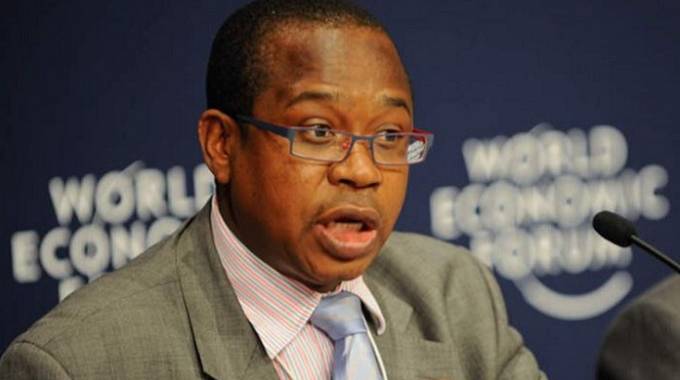
By Michael Gwarisa
Commenting on the prevailing Cholera outbreak, Rusike said in as much as the rising number of Cholera deaths and infections exposes the government’s poor disaster mitigation mechanisms or perhaps the lack of political will, this was no time to shift blame on each other but to work together as a progressive force against Cholera.
“Other than declaring the cholera outbreak, that has so far claimed 25 lives and infected 3 700 people, a state of emergency, government response has been lukewarm and at a snail’s pace. Outbreaks of gigantic proportions like these require a very swift national response through raising awareness, treatment and restoration of basic social services. It is appalling that in 2018, people are still dying of such a primitive and preventable disease.
“The Community Working Group on Health (CWGH) calls for a concerted approach among key stakeholders that include the government, local authorities, residents associations, corporate world and the donor community to address the pandemic to save lives. It will be grossly irresponsible and dereliction of national responsibility for the government to allow the situation to degenerate to the 2008 levels where cholera claimed over 4500 lives and left several thousands affected,” said Rusike.
He added that the most worrisome aspect of the epidemic was the fact that the Cholera was that of a drug resistant strain bacteria which could hamper all the efforts if no solution is devised sooner.
“It is terrifying to hear that the strain of cholera bacteria that was isolated in patients in Harare has been determined to be resistant to first line antibiotics Ciprofloxacin and Ceftriaxone. A situational report prepared by the Ministry of Health and World Health
“Organization has painted a grim picture of the challenges facing the city of Harare at the moment saying 2 million people are in danger of co-infection of both cholera and typhoid. With resistance to first line medication it becomes imperative that the government source alternative medicine.”
He also took a swipe at government for neglecting the cholera crisis for the love of lavish lifestyles.
“The US$1m availed by government – criticized for its unquenchable propensity of spending on luxury cars for the Chiefs than important national issues – is not only paltry but an insult to relatives and friends who have succumbed to cholera, typhoid and other waterborne diseases in the past days.
“The cholera outbreak highlights the failure of government to maintain basic public health standards. It is a terrible consequence of failing to invest in and manage both its basic water and sanitation infrastructure and its health system. In most urban centres, residents go for months without tap water, forcing them to dig shallow and unprotected wells and boreholes that have been contaminated by raw
sewage flowing from burst pipes.
“Cities, once the epitome of good hygiene, have now been turned into big communal villages. Local authorities are in charge of all water delivery, sewerage, and refuse collection. They are also the recipients of all rates paid by residents who expect proper service delivery. Authorities must be held accountable to all these preventable an avoidable deaths. We have also heard with dismay, how City authorities are diverting money paid by residents to buy luxury cars and giving each other loans for personal gain,” he said.
He emphasized on the need for clean water in the short term so as to avoid new infections and reinfections in the cholera epicentre areas.
“Residents need adequate aqua tablets, they need boreholes; they need water bowsers as a matter of urgency. The MoHCC, the city fathers together with residents associations and other stakeholders must increase public health awareness programmes and improve public engagement forums to disseminate accurate information to residents.
“In the long term, Zimbabwe needs a consistent supply of clean water to all its people and in urban areas, replace the old water pipes that are letting sewage sip into the water reticulation system to permanently stop future outbreaks. Remember, most of these water and sewer pipes were laid during the colonial era and no effort has been made to replace them 38 years after independence.”
He also urged the Ministry of Health and Child Care (MoHCC), who are the custodian of the recently signed Public Health Act (PHA), to utilize the new law to deal and prevent the outbreak of preventable diseases such as cholera and typhoid. The revised Public Health Act should not just remain on paper but fully implemented and enforced to address the public health concerns.
“The network would like to applaud the corporate world and the donor community for chipping in with material and financial resources in an effort to stop the outbreak. We, however, would like to quickly point out that overreliance on external assistance is not sustainable for any country especially in Zimbabwe where, in most cases, political considerations supersedes all other considerations.
“For years now, Zimbabwe has been failing to adequately provide for the health sector resulting in the outbreak of archaic diseases. It has never met the 15% Abuja target despite acceding to the Declaration over a decade ago. The country is endowed with several kinds of mineral resources that it should not struggle to fund its health delivery system. It has gold, diamonds, platinum, lithium, nickel, chrome and several other at its disposal but surprisingly it is failing to adequately utilize them. This clearly points to poor prioritization or poor governance and lack of accountability as the resources are channeled to less needy areas to satisfy personal political needs.”
He also said that the failure, or perhaps lack of political will, to prioritise funding the health sector gives credence to the widely-held perception that government has been acting that way because most of the political elite are not treated locally but airlifted abroad, even for minor ailments, at the taxpayer’s expense.
“Only the poor are “treated” at local clinic where there are no medicines. Surely, how do you explain the “manmade deaths” to medieval diseases such as typhoid, cholera, the absence of emergency services and now the likely deaths from TB, which is treatable in this day and age”

Ncube criticised over failure to prioritise health

FINANCE minister Mthuli Ncube has been criticised for failing to prioritise the funding of health in the 2019 budget, with health lobbyists dismissing it as a mere ‘ritual’ and a piece meal, which falls short in addressing the comatose health delivery system, plagued by drug outages and poor infrastructure.
BY PHYLLIS MBANJE
Although the allocation of $694,5 million (9,3%) is an increase of 33% from last year’s, it is still a far cry from the target of 15% set in 2001 by members of the African Union during a conference in Abuja, Nigeria.
Pitted against galloping prices for drugs, often charged in foreign currency, and an acute shortage of essential equipment in public health facilities as well as key staff, the amount is a far cry from the target of $1,3 billion, which the ministry requires to function properly.
In his presentation, Mthuli said “focus will be on ensuring that the referral system is re-established”.
Community Working Group on Health chief executive Itai Rusike said the allocation was inadequate.
“The massive increase in essential drug costs, drop in drug purchase by low income people and a fall in use of essential health care services are all issues that need looking into,” he said.
Rusike said the state of health services’ near-collapse is directly related to government misplacing its priorities.
Health lobbyist Fungisayi Dube, of the Citizens Health Watch, said the budget demonstrated that government did not prioritise health services.
“The budget sounds more like just a process or ritual that needs to be done. If the government really appreciated the challenges in the hospitals, they would have given a meaningful allocation,” she said.
Dube said it was disappointing to note that there had not been a deliberate effort to address maternal health challenges against a backdrop where “2000 women die every year due to maternal deaths”.

She, however, appreciated the pharmaceutical duty rebate on essential raw materials for drug manufacturing.
“We just hope it will be sustained to make menstruation easy and bearable for women. We want to see if this will really reduce the costs we incur every month,” she said.
Health rights and social equity expert Rutendo Bonde said it was a daunting task to prioritise health, among so many competing urgencies.
“However, what is good in this budget is significant investment in some other areas like measures to support local pharmaceuticals. For how long can we run a health delivery on imported drugs?” she said.
The situation at most public health facilities continues to spiral out of control, with institutions struggling to function on a shoe-string budget.
This has also resulted in staff getting demotivated and in turn lump it on the patients, who bear the brunt of it all.

More doctors join strike

More doctors yesterday joined the on-going strike, defying a government message to call off the job action.

BY VANESSA GONYE/EVERSON MUSHAVA

The doctors have been on strike since Saturday to protest poor remuneration and the deteriorating health situation in the country.

“Only four out of 91 doctors came for work and I think the rest are waiting for talks between the doctors’ association and the employer over the issue of solving their problems before they report for duty,” Harare Central Hospital CEO Nyasha Masuka said.

Parirenyatwa Hospital and public health institutions in Manicaland and Bulawayo faced similar situations, with Mpilo Central Hospital and United Bulawayo Hospital keeping their out patient departments closed.

The Zimbabwe Hospital Doctors Association (ZHDA) yesterdya also distanced itself from utterances made by former member, Patrick Mugoni, who “represented” doctors at a meeting with the Health minister on Monday and appeared on the national televison urging doctors to go back to work.

Mugoni, who was ZHDA secretary-general until a few weeks ago when he was removed from office through a vote of no confidence for being partisan, is said to have met with Health minister, Obadiah Moyo on the pretext that he was representating the association and subsequently announced that doctors should resume duties with immediate effect while their grievances have not been addressed.

ZHDA said Mugoni was a bogus agent and not one of their own.

“The Zimbabwe Hospital Doctors Association wishes to advise members of the medical profession, the media and the public at large of the futile attempts by one Patrick Mugoni, who appeared on ZBC purporting to represent ZHDA. The concerned doctor has been fired from the association for bringing the name of ZHDA into disrepute and violating the constitution of the ZHDA.”

“Dr Patrick Mugoni was suspended from the ZHDA after ‘crying’ while addressing the Zanu PF rally in Gweru. The ZHDA executive urges all stakeholders to ignore his utterances and any communication on the industrial action will be made through the information department,” ZHDA said in a statement.
ZHDA also promised to have Mugoni examined by colleagues in the profession and to give him psychological help and counselling, if needed.

Mugoni is infamous for weeping on national television after the doctors were awarded a pay hike in March. He said at the time he had been overwhelmed by emotions.

Zimbabwe Nurses’ Association (Zina) secretary-general, Enock Dongo, speaking on behalf of the Health Services Board yesterday said health workers were still negotiating with government.

“We are still negotiating with government, doctors are a single union that has downed tools, we appreciate that they have a genuine cause,” Dongo said.

Cabinet yesterday said it did not deliberate on the issue of the doctors’ strike.

“We did not discuss about the doctors’ strike because the Health minister told us that he talked to the them and that they have agreed to go back to work,” acting Information minister Mangaliso Ndlovu said yesterday.

The doctors expressed concern at the Health minister’s conduct.

“We wish to set the record straight that the industrial action that started on the 1st of December 2018 is still ongoing and the healthcare crisis in the country has reached an unprecedented critical level. Instead of addressing what is now perceived as a serious national health crisis, the Minister of Health seems to display an ‘I do not care’ attitude and ‘it is business as usual’ approach.

“We are even greatly disturbed that the minister went on national television in the evening of (Monday) to misinform the whole nation that the ongoing industrial action has been called off. He went on to acknowledge there is a serious shortage of vital medicines in public hospitals but nothing was being done,” ZHDA said.

Other stakeholders also laid into the Health minister for not handling the issue professionally.

“It is shocking that the Health minister Obadiah Moyo dwells on the legality of the job action than solutions as if he is reading from his predecessor’s script. No responsible and accountable minister or government would turn a blind eye to a crisis of this magnitude or wishes it away. We are in this health crisis minister because your predecessor (David Parirenyatwa) used to behave the same way: burying his head in the sand than tackling the issue head-on,” Community Working Group on Health director Itai Rusike said.

“We would like to remind the government that it has a national obligation to see that its citizens have access to quality and affordable health services as guaranteed in section 76 of the country’s Constitution. And that responsibility can only be achieved when health personnel like doctors, physicians and nurses are working normally,” Rusike said.

Meanwhile, Moyo at a Press conference revealed that President Emmerson Mnangagwa has unveiled a $25 million drug facility, with about 100 000 tonnes of medicine set to arrive from India.

Health budget slated as ‘grossly inadequate’

Helen Kadirire

HARARE - Zimbabwe's 2019 health budget remains grossly inadequate to fund the critical needs in the sector, the Community Working Group on Health has said.
CWG executive director Itai Rusike told the Daily News that government continues its over reliance on development partners, which raises the spectre of a health emergency should donor funding be withdrawn.
His remarks come as Finance minister Mthuli Ncube last week announced the 2019 National Budget with $694,5 million or nine percent of the budget allocated to the sector against the 15 percent stipulated under the Abuja Declaration.
“In nominal terms the health budget appropriation has remained largely stagnant at about 9 percent. The percentage is, however, far less when you take into account the effect of inflation,” Rusike said.
“Moreover, the bulk of the resources will be channelled towards financing employment costs at 66 percent leaving very little for capital expenditures. Government must demonstrate its commitment to health by at least meeting the Abuja Declaration benchmark.”
In April 2001, the African Union countries met in Abuja and pledged to set a target of allocating at least 15 percent of their annual budget to improve the health sector and urged donor countries to scale up support. Years later, Zimbabwe has dismally failed to reached this target.
“Development partners are expected to complement 2019 Budget appropriations. The Global Fund for instance is expected to provide US$75 million,” Rusike said.
“The high dependency on external financing is unreliable, unpredictable, unsustainable and highly dependent on the political environment, raising concerns on the sustainability of health financing and the vulnerability of government’s budget should external funding be withdrawn,” Rusike said.
He said government also spends a relatively small share of its gross domestic product (GDP) on health care.
The CWGH director highlighted that lower levels of per capita health expenditure indicate that health expenditure in the country is insufficient to guarantee adequate access and quality of services.
Rusike emphasised that the inadequate public financing of health has resulted in an overreliance on out-of-pocket and external financing which is highly unsustainable.
He also said, as usual Treasury allocates more towards Defence and Home Affairs which do not provide any meaningful development to a country.
“Defence and Home Affairs spending continue to account for a predominant share of the total budget crowding out critical sectors such as health and social protection.
In the 2019 National Budget the ministry of Defence was allocated $547 million up from $420,4 million while the ministry of Home Affairs received $518 million up from $435,5 million.
“Countries that are doing well both regionally and internationally are reducing defence and security expenditure to allow for the scaling up of pro-poor expenditure on human and infrastructure development.
“Military and security spending have been shown to retard development by diverting government resources that could be put to better use. In fact development, not military deterrence, is the best strategy for a safer society. Developed countries spend relatively more on health than they spend on defence while developing countries spend relatively more on defence than they spend on health,” he said.

Govt, council should stop blame-game on cholera

GOVERNMENT and local authorities have been urged to ensure provision of basic water and sanitation infrastructure in order to effectively deal with the cholera and typhoid outbreaks, the former which has claimed the lives of 30 people countrywide and affected over 5 000.
BY VENERANDA LANGA
The Community Working Group on Health (CWGH) yesterday reproached government and local authorities over continuously playing the blame game, saying they must concentrate on restoring infrastructure and social services to save lives.
“The cholera outbreak highlights the failure of government to maintain basic public health standards,” Itai Rusike, the CWGH executive director said.
Rusike said the main problem was that in most urban residents go for months without tap water, forcing them to dig shallow and unprotected wells and boreholes that can be contaminated by raw sewage flowing from burst pipes.
“Cities, once the epitome of good hygiene, have now been turned into big communal villages. Practically and in the short-term, people need clean water – they need adequate aqua tablets, they need boreholes; they need water bowsers as a matter of urgency,” he said.
Rusike said local authorities were in charge of all water delivery, sewerage and refuse collection and were the recipients of all rates paid by residents that expected proper service delivery, yet there were reports that they were diverting money paid by residents to buy luxury cars and giving each other loans.
He said Zimbabwe needs consistent supply of clean water in urban areas if the country is to end the burden of waterborne diseases.
Most of Zimbabwe’s water and sewer pipes are archaic as they were constructed during the colonial era and have not been refurbished for the past 38 years.
ZimRights in a statement also said cholera and typhoid were hygiene-related ailments fuelled by poor water reticulation systems in Harare, apart from lapses in personal hygiene.

Sustainable funding mechanism critical for healthcare

CWGH@20 - Giving a health story the cutting edge: Investigative journalism to promote transparency and accountability in the health sector workshop in Bulawayo, Zim

The red flag raised by the Community Working Group on Health executive director Itai Rusike on the need for government to present a sustainable funding mechanism to ensure renal patients can have access to effective and consistent free renal services at the country’s public hospitals could not have come at any better time.

Editorial

In fact, we believe government should heed the advice to save unnecessary loss of life countrywide.

It is a good thing that the government has rolled out this programme to provide free renal dialysis to financially-disadvantaged citizens, who are not on medical aid cover.
However, what is more critical is ensuring that the programme is sustainable. This means the need for a clear long-term and sustainable funding mechanism is critical otherwise without that, the noble programme may flounder due to lack of financial resources.

It is not in doubt that the costs of health services in Zimbabwe have become too exorbitant that even people on medical insurance are struggling. Given that access to health is a basic and fundamental human right, it is important to ensure that something is done in this regard.

Multitudes of patients always dig deeper into their pockets to access the critical service, but given that the general cost of living in the country has skyrocketed, this, indeed, is not sustainable. It is against this backdrop that government should consider coming up with a clear and sustainable funding mechanism so that it goes beyond mere political grandstanding while thousands of citizens continue to suffer.

Currently, renal dialysis costs between $150 and $200 per session and this is way beyond the reach of majority ordinary Zimbabweans who are struggling to eke out a decent living against the backdrop of a harsh economic environment.

Clearly, the government must show that it feels for the majority poor people and ensure that they get the help they require. It is quite unfortunate that the government is now offering free renal dialysis to disadvantaged patients using money collected under the Health Levy Fund, which is supposed to cater for drug shortages and obsolete equipment in hospitals.

This is a sign of gross indiscipline, which can only be cured once the requisite mechanism of funding the health costs of those in need of renal dialysis is in place. This needs to be looked into as a matter of urgency.

Lukewarm approach to typhoid outbreak slammed

HEALTH stakeholders are deeply agitated by the lukewarm approach being shown by both the government and local authorities in addressing the typhoid outbreak that has so far officially claimed nine lives in Gweru and Masvingo.
BY PHYLLIS MBANJE

Itai Rusike

The outbreak has, however, spread to other parts of the country, with new cases being reported in Kadoma.
“There is need for a serious public campaign for local authorities to deliver safe water. Our water sources are contaminated. What are we doing about it?” Fungisayi Dube from the Citizens Health Watch (CHW) asked.
She said the new local authorities had a mandate to step up and eradicate typhoid and to be open about the situation with the water system so that necessary measures can be taken.
“The water should be tested. We need a proper report on the quality of water,” Dube said.
Community Working Group on Health (CWGH) director Itai Rusike (pictured) said it was disturbing that the outbreak of water-borne diseases such as typhoid and cholera was no longer a new phenomenon in Zimbabwe.
“It is even more disturbing when the authorities take over a month to officially acknowledge the problem, and let alone try to address it,” Rusike said.
Masvingo has been facing serious water challenges, a situation which is conducive for the outbreak of waterborne diseases like typhoid.
Some parts of Kadoma have gone for more than 20 years without running water and in June, the local authority said they needed about $4 million to address the challenge.
“This care-free approach to human life should not and cannot be tolerated and it is a clear indication of the levels of disdain the government has on the ordinary poor Zimbabweans. The Community Working Group on Health is deeply depressed by the lackadaisical approach being shown by both,” Rusike said.
He said the Health ministry, despite being the custodian of the Public Health Act, continued to act as if the situation was normal even in the wake of nine deaths.
“As CWGH, we urge the Health ministry, Gweru City Council and other stakeholders to quickly find common ground and tackle this health crisis,” he said.
The stakeholders have, however, welcomed the signing into law of the revised Public Health Act by President Emmerson Mnangagwa to replace the old and outdated 1924 Public Health Act.
“Local authorities and companies in the country were taking advantage of the gaps and weaknesses of the colonial enacted Act to continue polluting water bodies because it is cheaper to pollute and pay than dispose raw sewer and industrial waste appropriately,” Rusike said.