

CWGH Training Gender Justice Champions in Matabeleland region

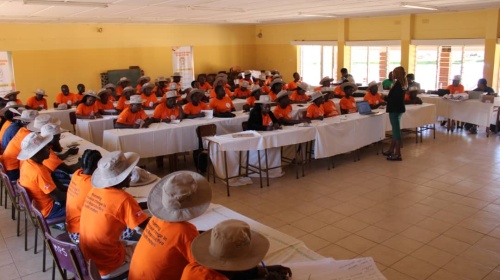


CWGH training Gender Justice Champions responsible for raising information levels on GBV, working with community structures such as Village Health Workers, Child Protection Committees (CPCs), the local leadership and Social Welfare Focal persons in Bubi district, Matabeleland North Province. The champions also report cases of GBV and offer support to survivors of abuse.
Health experts call for swift TB action

HEALTH experts said this week the government must urgently channel resources towards the fight against tuberculosis, as infections remain high.
Zimbabwe joined the rest of the globe to mark World TB Day on Sunday.
It was commemorated under the theme “YES! We Can End TB’’.
Itai Rusike, director at Community Working Group on Health, said Zimbabwe records around 21 000 new cases of TB annually, with 3,1% of these being drug resistant (DR).
The number of new cases were estimated at about 16 300 in 2021.
Experts said TB claimed the lives of 1,3 million people worldwide in 2022.
In Zimbabwe, TB kills close to 6 300 people annually, which is an increase from 4 600 deaths in 2019.
It is the third leading cause of death in Zimbabwe, according to official statistics.“This is unacceptable,” Rusike said.
“We know how to end TB. We have the lifesaving tools to prevent, diagnose and treat TB. But we must break down the barriers and inequities that cause millions of people to suffer and die from TB every year.
“We note the growing epidemic of DR-TB, affecting mainly poor and vulnerable populations in our country and we call upon our government to take necessary steps to address and strengthen the health systems, by investing resources to prevent transmission.
“They must expand access to early diagnosis and effective treatment for all forms of TB,” he said.
Rusike said the government should provide financial support for TB research in Zimbabwe, as well as, developing innovative methods to prevent, diagnose, and treat the disease.
“Funding for research on TB in Zimbabwe is minimal, and new tools to prevent, diagnose and treat TB are urgently required.”
According to research, TB is widespread in communities that are ravaged by poverty, poor housing, inadequate nutrition and overcrowded transport systems. Its transmission is aggravated by unsafe working conditions.
“Without adequate financial resources, we cannot win the fight against TB but it is also important to note that the fight against TB is everyone’s responsibility and not just for the health sector alone. We should all take action to address it,” Rusike said.
Tuberculosis is an infectious disease. Its control hinges on preventing people from getting infected.
Ministry of Heal and Child Care Aids and TB deputy director Fungai Kavenga said government has put in place measures to curtail the spread of the disease.
“At health facility level, individuals are screened for TB symptoms at every visit and undergo further tests if symptoms are present,” he said in an interview with Zimbabwe Independent.
“Community level activities involve targeted active screening for TB using mobile trucks and volunteers, focusing on high-risk groups, such as mining communities.”
Kavenga emphasised that trends showed that TB in some cases is “HIV-driven”.
“Prevention therapy is offered for those at higher risk of developing TB,” he added.
Kavenga said government had procured TB detecting equipment.
“In terms of treatment, efforts are being made to update guidelines, ensure a steady supply of commodities and medicines, provide laboratory support services for patients on treatment, offer social and financial support, and train healthcare workers,” he said.
“These measures aim to provide quality care and increase retention of patients in treatment programmes.”
According to the World Health Organisation Global TB Report of 2023, TB remains a major public health emergency globally. (The Zimbabwe Independent)
Panel Discussion with Thabitha Khumalo & Itai Rusike

Honourable Minister of Health and Child Care Dr Douglas Mombeshora and Secretary of Health and Dr Aspect Maunganidze with the CWGH Executive Director Mr Itai Rusike at the meeting with Development Partners

Congratulations to Hon. Deputy Minister Kwidini on his appointment as the Deputy Minister of Health. Makorokoto Amhlope!
 Hon MP Kwidini, Now Deputy Minister of Health , When he was a Member of the Parliamentary Portfolio
Committee on Health making a contribution at the CWGH
pre-budget meeting
Funding needed to achieve Universal Health Coverage

CWGH Executive Director, Itai Rusike highlights the need for multi-sectoral coordination to combat cholera in Zimbabwe
In this WHO latest issue, CWGH Executive Director, Itai Rusike
highlights the need for multi-sectoral coordination to combat cholera, as Zimbabwe launches the oral cholera vaccination campaign, targeting 2.3 million people across 26 districts.
https://www.afro.who.int/countries/zimbabwe/publication/cholera-bulletin-issue-5
