Gvt Should Come Clean On the Free Blood Initiative Financing-CWGH

… as fears of politicisation of health products grows
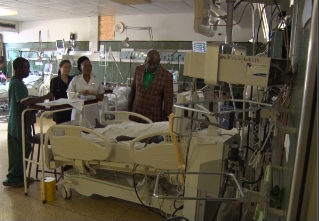
The Community Working Group on Health (CWGH) has commended government for
making blood and blood products free in public health institutions beginning next month, but expressed concern over the unclear funding mechanism for the drive.
By Michael Gwarisa

CWGH executive director Itai Rusike said the high cost of blood has been one of the major barriers that prevented ordinary Zimbabweans from accessing and enjoying their health entitlements and rights as enshrined in the country’s Constitution which stipulates that health is a right.

He however said government should come clear as to how they intend to fund the free blood subsidy.

“However, notwithstanding the good intentions, the public would however like to know how the government – already saddled by external debt and a collapsing national economy – will fund the subsidy on blood? Where is the money coming from?

“Will the money come from national fiscus, AIDS Levy, Health Levy or Health Development Fund? Is
the subsidy funded by external partners? For how long? And how sustainable is the free blood
initiative?” said
He added that without answers to the above queries, CWGH remains concerned about the feasibility and
sustainability of this very nobble initiative because such a pronouncement has to be backed with a
strong financial purse.

“What measures has the government put in place to make sure blood will always be available given that it has been always in short supply even when being sold? Making a pronouncement without explaining the modalities is not enough.”

He added it was critical for the Ministry of Health and Child Care (MoHCC) to come out clean and explain the source of funding and the sustainability of this noble initiative for the sake of transparency, accountability and good governance.

“We fear that free blood initiative will go down the “user fee policy” of pregnant mothers under 5s and those aged 65 years and above which remained in most areas a political pronouncement.

“In 1980 free health care was introduced for those on low incomes (below $Z$150, then worth US$220). The policy position on user fees has been that those who can afford to pay for services should do so but implementation of the principle has been mixed.”

Meanwhile, the policy of free public sector care at rural clinics is still in force, although most mission and local authority clinics do not follow it hence this has been mainly funded by development partners through the Results-Based Financing (RBF) funded by the World Bank and the Health Development Fund (HDF) a basket fund by multiple donors such as DFID, EU, Swedish Government and the Norwegian Government.

However, in some health institutions mothers continue to be detained after delivery and Child Birth Records being withheld at public health institutions after failing to pay fees.

“It is against this background that CWGH demands that government explains fully the source of funding and the modalities to avoid the pitfalls of the “user fee policy” which has not been fully embraced and implemented for the benefit of the vulnerable groups it is supposed to serve.

“We need a separate budget line allocation from the national health budget to fund the free blood
policy to public health institutions!!!”

He however said the move to make blood free would lessen financial strain on patients and preventing avoidable deaths that have been occurring in the country as patients failed to access blood because of its high cost.

“The government’s subsidy on blood therefore comes as relief considering the high number of people that are dying in public hospitals after failing to buy blood while families have been disposing priced possessions for a song to save the lives of their loved ones.

“It is commendable that government has since last year been gradually reducing the cost of blood to
ensure that it is within the reach of the ordinary person from $150 a pint in 2016 to the current $50
a pint, with the ultimate aim of making it totally free by next month.”

He added that the free blood initiative was a welcome move as it shows the government’s political will and total
commitment to Universal Health Coverage (UHC), which entails all people and communities accessing health care without financial hardships.

Concern over delay of renal unit opening

The Community Working Group on Health (CWGH), a health delivery services pressure group, has expressed dismay over the continued failure to operationalise the renal unit at Masvingo General Hospital, saying the situation was making life difficult for kidney patients in the province.

Efforts to open the unit have stalled several times in the past few months amid allegations of red tape and bureaucratic bungling by officials at the provincial health referral centre.

CWGH provincial chairperson Mrs Entrance Takaidza last week called on the Ministry of Health and Child Care to ensure the unit is opened as a matter of urgency.

“As an organisation which stands for patients’ rights, we are perturbed by the delays in installing a renal unit at Masvingo General Hospital.

“This is happening at a time when the number of patients with kidney disease is increasing,” said Mrs Takaidza.
She said it was worrying that the Ministry of Health and Child Care has made several promises in the past over the opening of the renal unit at Masvingo General Hospital.

“We were told the machine (dialysis) was supposed to start working by end of last month, with some personnel having already been trained to operate it. However, a month down the line, nothing has happened and this is making life hard for patients in need of dialysis services.’’

Mrs Takaidza said kidney patients continue to fork out their hard-earned money to travel either to Harare or Bulawayo for dialysis services, yet the renal unit was lying idle at Masvingo General Hospital.

At Makurira Memorial Hospital, which is privately-owned, a dialysis session costs more than $150, while the average cost at Government-owned hospitals is about $60.

Masvingo provincial medical director Dr Amadeoas Shamu said opening of the renal unit was being hindered by outstanding minor works.

He admitted that its operationalisation was taking too long.

“The machine has been installed and personnel trained. However, we cannot start operating the machine now because there are minor works that need to be done before dialysis sessions begin,” said Dr Shamu.

The dialysis machine at Masvingo General Hospital was acquired from China under a government-to-government agreement in 2016, which benefited all major health referral institutions in the country’s 10 provinces.

Walter Mswazie Masvingo Correspondent

Public Health Act (Amendment) Bill: Community participation crucial

Itai Rusike Correspondent
The opportunity afforded to Zimbabweans to provide input into the supreme health law of the country is refreshing.
It is important to have communities come out and participate during the public hearings on the Public Health Act (Amendment) Bill to ensure that their views and perceptions have been incorporated into the final Bill and that it addresses community needs as enshrined in the nation’s Constitution.
Following a number of public health blunders that have seen resurgence of previously controlled diseases, unnecessary death, disability and suffering of Zimbabweans, it is imperative to have a shared vision and mission for public health across national stakeholders, including a shared understanding of the purposes and objectives of a public health law and the scope of public health action.
The role of communities should be to demand environmental, infrastructure and structural provisions to promote health for all in urban, rural, farming, mining and institutional spaces.
Zimbabweans must use this opportunity to ensure the development of a law that is not simply a means for controlling nuisances, but a tool for promotion of healthy conditions, for co-ordination of health activities and for improving the dialogue and relationships across public health authorities for the attainment of the country’s vision and mission for the health and well-being of its citizens.
In the developed world, health promotion is a high national priority that sits in the Prime Minister’s Office and ensures the provision of a healthy environment for all citizens and the attainment of health in its totality through targeted initiatives such as healthy cities, lifestyles, food etc.
Community concerns regarding gaps in the gazetted Public Health Act (Amendment) Bill
Community level mechanisms and functions
• Although Health Centre Committees (HCCs) have been legally recognised in Section 17, they are not represented in the District Health Team in Section 16 for feedback to and from the communities. Therefore, we strongly recommend that community involvement mechanisms need a representation mechanism in the district health team as the district government council in addition to the hospital management board, which oversees functionality of the district hospital.
• HCCs were fully captured. However the role of Village Health Workers (VHWs) and other community-based workers is not satisfactorily and explicitly stated in the act except for Section 137 sub-section 1(b) in a general statement that says “The minister may make regulations providing for: Recognising and providing for the roles of non-state actors and communities. Thus provisions for the VHWs could be detailed soon after Section 17 of HCCs.
• This is important because VHWs do not have an association or representation like other health cadres and yet they are the backbone of all community health programmes, hence the need for legal backing in order to be given priority. Include specific inclusion of the broad roles and functions of VHWs, including how they relate to other community-based workers (home-based carers, family planning distributors, OI/ART/Dots coordinators, school health coordinators, malaria spray operators etc)
• Section 28: The Bill is silent on the Health Centre staff establishment. It is therefore crucial to have a specific clause in the Bill that speaks to issues of the ideal healthcare establishment that looks realistically to the country attaining universal health coverage and the SDGs given that the current staff establishment was determined using the 1982 population statistics and when the disease burden was very low.
• Although it is covered in the Health Services Act, it should still reflect in the Public Health Act (Amendment) Bill so that the two are harmonised and be in tandem with the Constitutional provisions of leaving no one behind.
• Section 3: The Minister of Health and Child Care as a competent authority and the custodian of the Public Health Act should enforce the Act by demonstrating adequate powers supported with resources than has been the case under the current law.
The minister requires the legal muscle and needs teeth to bite so that perennial offenders of well-articulated and scientifically proven public health provisions, interventions and standards, such as the City of Harare, other local authorities and individuals can be brought to book and potential public health disasters averted before loss of life as has so far been the case and without fear or favour.
Itai Rusike is the executive director for the Community Working Group on Health

Health ministry bemoans poor budget

HARARE – The health sector’s $520 million 2018 budget allocation remains too low, despite Finance minister Patrick Chinamasa having increased it from $454 million, Health minister David Parirenyatwa said.
He said there was a lot of damage, wear and tear at the hospitals that needs to be fixed.
“Our target was $1,1 billion, it’s still not sufficient if you look at the number of repairs that are needed in our hospitals, just as an example.
“Before I touch medicines, if you look at how many laundry machines countrywide have broken down, the X-Ray machines that need to be replaced, the laboratory equipment that need to be addressed. Parirenyatwa said.
“We cannot replace all the laundry machines in all the hospitals in one year; we need to phase it and all that needs a big budget, so that budget to me is insufficient.”
Zimbabwe’s hospitals have been crippled by lack of medicines and equipment, which has in the past resulted in the suspension of some surgical operations at some major hospitals.
In trying to solve the situation, government introduced a health tax on airtime to boost revenue collection for drugs and equipment procurement, which according to Parirenyatwa has so far fetched $22 million.
Community Working Group on Health executive director Itai Rusike said the revised budget allocations were not adequate to meet a lot of challenges and that it still fell below “the Abuja Target of 15 percent of national budget that should be allocated to the health ministry.
“Access to allocated funds has also remained an issue in previous years as a result of limited flows of funds into the fiscus and other issues to do with absorption of funds.
“However, the need to prioritise the health sector when funds are disbursed from the fiscus has to be emphasised with the ministry of Finance,” he said.
“Civil society organisations have advocated for a pro-poor budget and a budget that promotes the principles of primary health care while moving towards the realisation of universal health coverage. We have also advocated for budget policies that reflects the country’s commitments to the international laws, norms and commitments such as the Right to Health, the Abuja Target and the Sustainable Development Goals.”

Condoms, sanitary wear debate rages on

Sheillah Mapani Features Writer
Every year, the Ministry of Health and Child Care (MOHCC) acquires condoms for free distribution to help fight the HIV and Aids pandemic. This has been hailed by stakeholders in the health sector as an important strategy to contain the spread of the disease.
However, other keen watchers have decried the absence of similar approaches to sanitary wear which thousands of girls school going age cannot access, especially in rural areas. Some critics suggest that the money being allocated to acquiring condoms be directed to sanitary wear as the latter serves an involuntary call of nature.
Debate on this contentious issue intensified in the past week after MDC Proportional Representation legislator Priscilla Misihairabwi-Mushonga expressed her concerns in a debate which focused on the 2018 national budget saying she prefers the prioritisation of sanitary wear in the budget to condoms.
“On that point Mr Speaker,” she said, “why are we having condoms in the budget and not sanitary wear and yet for men who are over 40 years or 45 years, actually having an erection is almost like winning a lottery.
“It is very difficult for a man over 40 to have an erection. So, we have condoms that are actually not being used because most of these men cannot use them,” the legislator was quoted saying in her contribution which elicited mixed reactions.

Sanitary wear should be prioritised
Said Simon Chuma of Norton: “The MP stated that condoms are luxuries for men, which is wrong for everyone including teenagers use condoms. Though abstinence is being preached everyday it’s rarely practised. Condoms save lives.
“A number of school children born with HIV are sexually active and cannot afford to buy condoms on the market. Providing them with free condoms can help save their lives.”
Others say sanitary wear and condoms should all be provided for free. “Sanitary wear and condoms are both of importance so they should be prioritised,” said Leah Nyamhunga at a Glen View maternity clinic.
“Many couples are using condoms as a family planning method. It’s not true that they are not being utilised. It’s not a waste.”
Padare Men’s Forum on Gender activist Walter Vengesayi, supports the legislator’s position. “The honourable member was making a good point about universal access to sanitary wear. As Men’s Forum on Gender we support efforts towards making sanitary wear available for free,” he said.
“A lot of girls and women are being disadvantaged because they cannot afford them.” He also said free access to condoms and sanitary wear were important as far as sexual, reproductive health and rights were concerned.
“Our Government should prioritise both condoms and sanitary wear because one saves lives and the other improves the well-being of women,” the gender activist said. “So free access to both is important and nothing between the two should be looked down upon.”
Vengesayi disputed assertions on men’s erectile dysfunctions. “It is my humble opinion that one cannot generalise when it comes to erections. Some men have difficulties but the rest are fine so they use the condoms very well,” he said.
“It’s therefore important to say they should be available to those who need them, young and old.
“Condoms are not being wasted because those who cannot use them do not have any need for them but those who can are using them.”
Health experts say that despite the prioritisation of condoms being linked to sexual pleasure, they have multi-purposes.
“They are used by both men and women to prevent the spread of sexually transmitted diseases and as contraceptives for women and girls.
Executive director of Community Working Group on Health (CWGH), Itai Rusike said condoms became a priority in the national budget after 2002 when the government declared AIDS a national emergency. The AIDS Levy and National AIDS Trust Fund were established in 1999 as a unique tax based contribution to public spending.
“Zimbabwe has been among the highest countries affected by HIV in the region but levels have fallen post-2002 due to the free distribution of condoms,” said Rusike. “The country has successfully battled HIV and AIDS pandemic and registered a reduction in both incidence and prevalence through such innovative programmes on condoms and the Aids Levy.” He said the government had managed to the reduce prevalence rate through prioritisation of condom use from 21.5 percent to the current 14 percent.
“Therefore that is enough reason why condoms are being prioritised as lives are being saved,” Rusike said. Despite this, he however, said there was also need for the prioritisation of sanitary wear to enhance access for rural girls.
“Sanitary wear is generally available in most areas but very costly for most girls and women. They have resorted to using unhealthy means such as cow dung, maize stocks and pieces of cloth which can be washed and reused during the next cycle,” he said.
“So lack of proper sanitary products leads to infections which may lead to sexually health related complications.” The Government, he said, needed to include the sanitary wear in the national budget too, to enhance access.
Many people hailed the Misihairabwi’s motion advocating for free sanitary ware but still maintained that condom budgeting was not trivial.
“We applaud the motion that seeks advocate for free sanitary ware, however, comparing condom budgeting as trivial could be uncalled for given that our nation is yet to achieve our 90 percent goal to new HIV infections, as such condoms have been useful for both the age referred, the younger and even older generation,” said Ekenia Chifamba, a Friend of the Girl Child activist. “The absence of condoms could become regressive to the gains made thus far. Sanitary pads are a basic need for the girls and women as we cannot run away from the truth. This is a biological process.
“At the same time the same girls and women who we are advocating for free pads are the same individuals who are engaging in protected sex hence trivialising condom budgeting could be exposing the same girls to HIV infections in the absence of the condoms.” Chifamba said the removal of condoms from the national budget will be retrogressive in the fight against HIV and Aids.
“In maintaining a healthy nation that safeguards the health and well-being of women, condoms become essential to protect them from early pregnancies as well as sexually transmitted diseases,” the gender activist said.
“Removal of condoms could become injurious to the gains made in national development. Although sex is engaged in as a choice, menstruation is biological hence one cannot make a choice to or not to menstruate, both issues ought to be treated the same.”
Zimbabwe still faces challenges with the issue of availability and affordability of sanitary pads as two local companies face closure over lack of foreign currency to import raw materials.
Most of the inputs used in manufacturing sanitary pads are sourced from South Africa and China. Sanitary pads prices range from US$1 to US$10 depending on the type and quality.
The majority of poor rural girls and women cannot afford them. A 2014 National Spending Assessment (Nasa) report suggested that Zimbabwe uses at least $7 million on condoms annually, of which the bulk is donor funded.
In 2016, Zimbabwe distributed at least 110 million condoms countrywide, up from the 80 million distributed in 2014, Government statistics indicate. Condoms have become easier to access as they are given for free in most health institutions and public places. Zimbabwe is number 10 in terms of condom use in countries with generalised HIV epidemic. It distributes about 9 million condoms every month on average.
Top users include Armenia (1) followed by Swaziland, Nigeria, Ukraine, Belize, Mauritius, Gabon, Lesotho and Haiti. In 2016, Zimbabwe spent more than US$11 million to import sanitary wear products, showing a sharp decrease from $23 million in 2015. Duty was scrapped on sanitary wear after legislators piled pressure on the Government. And, while debate on condoms and sanitary wear rages on, it still remains to be seen how the Government will handle this contentious issue in its fiscus.